

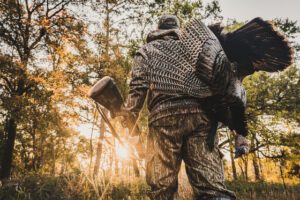
Strong population of 2-year-old birds anticipated
FRANKFORT, Ky. (March 24, 2026) — After a frigid winter filled with snow and ice, Kentucky’s 2026 spring turkey hunting season arrives with excitement for both hunters and biologists.
Higher-than-usual turkey brood surveys – summertime observations of young turkey poults hatched that year – signal healthy populations of gobblers for hunters to pursue in the commonwealth this season.
“All evidence suggests turkey numbers have improved over the past five years,” said Zak Danks, turkey-grouse program coordinator for the Kentucky Department of Fish and Wildlife Resources. “We share many hunters’ concerns about the turkey population, but the more we learn about our flock, the more excited we can be about the future.”
The spring hunting season kicks off with a youth-only weekend, April 4-5, followed by the 23-day general season starting April 18. Hunters with proper permits can harvest two birds during the season but only one a day. Legal birds are male or have a beard.
In 2025, hunters telechecked 30,661 birds, less than in 2024 and 2023 but more than in 2022 and 2021. Biologists say this year’s season has the potential for another high harvest, given numbers related to reproductive success two years ago:
- Brood surveys from 2024 showed 70 percent of hens with poults, compared to 62 percent in 2023. Male poults hatched in 2024 will be vocal 2-year-olds this spring.
- The average number of poults per hen increased between 2023 and 2024 not only statewide (from 2.3 to 2.7) but also in all three regions of the state. The increases in poults per hen were most significant in the east (from 1.78 to 2.28) and west (from 2.62 to 3.11).
- Last summer’s brood survey showed 3.5 poults per hen statewide. Production was greatest in the east (3.8) and in central Kentucky (3.6). Hunters should see an uptick in jakes this spring.
Danks said the optimistic brood survey data was backed up by a three-year study of nests, brood habitat use and hen behavior in three counties in western Kentucky that used transmitters resembling backpacks to track movement of more than 230 turkeys.
Preliminary estimates from that study showed the survival rate for adult hens was 70 percent to 74 percent and greater than 75 percent for juvenile hens – better than biologists predicted.
In addition, the higher-than-usual number of successful nests and higher poult survival rates in those three counties in 2024 showed the tremendous impact of the emergence of the 13-year Brood XIX cicadas in western Kentucky that year.
A separate four-year research study that involved capturing and leg banding nearly 1,300 male birds showed Kentucky’s annual harvest rate was 29 percent for mature gobblers and 6 percent for juveniles (jakes). The average year-to-year survival rate was 56 percent for gobblers and 78 percent for jakes.
“Harvest rates did not exceed the 30 percent to 35 percent threshold that past research indicated could be unsustainable, so we’re right where we want to be providing opportunities to hunters while protecting the flock long term,” Danks said. “We haven’t had such comprehensive numbers in decades.”
Hunters should familiarize themselves with the regulations before going afield. Basics include:
- Dates: General season, April 18-May 10. Youth season for hunters ages 15 and younger is April 4-5.
- Shooting hours: 30 minutes before sunrise to 30 minutes after sunset.
- Requirements: Annual hunting license and spring turkey permit (or all-in-one Sportsman’s License). Hunters 12 to 15 years old need a youth hunting license and youth turkey permit (or a Youth Sportsman’s License). Hunters 11 and under are license-exempt. Hunters under age 16 must be accompanied by an adult.
- Legal birds: Turkeys that are male or have visible beard.
- Bag Limits: Two per spring season, but only one per day. A limit of one bird per wildlife management area per season applies. A youth turkey permit allows hunters 12 to 15 years old to take one bird in either the spring or fall seasons.
- Clothing: Hunter orange not required; recommended if carrying a harvested bird.
- Tagging, recording: Fill out the Harvest Log before moving harvested bird and telecheck it by phone or online by midnight of the day it is recovered. Birds dropped off to a taxidermist or butcher must have a handmade tag with hunter’s name, phone and Telecheck confirmation number.
- Leg bands: Harvested turkeys with leg bands should be reported to Kentucky Fish and Wildlife on the Turkey Band reporting webpage.
- Baiting/feeding: Illegal to hunt turkey over bait.
- Callers/Assistants: Callers and assistants who are not hunting do not need licenses or permits.
For all regulations, general information and videos on turkey hunting and processing, see the Spring Turkey Hunting page or the Kentucky Spring Hunting Guide, both online at the Kentucky Fish and Wildlife website (fw.ky.gov).
For more discussion of the coming turkey hunting season, tune in to the Kentucky Afield 2026 Spring Turkey Live Q&A Show (recorded March 23, 2026), and to the Kentucky Afield Podcast in the coming weeks.